
Affiliate Disclosure: This post contains affiliate links. As an Amazon Associate, we earn from qualifying purchases at no extra cost to you.
If you are dealing with painful piles (hemorrhoids), an acute anal fissure, or recovering from perineal surgery or childbirth, a sitz bath is one of the safest and most effective conservative treatments available.
Derived from the German word sitzen (“to sit”), a sitz bath involves immersing only the hips, buttocks, and perineum in warm water. While the concept seems simple, doing it incorrectly, such as using irritating chemical solutions or squatting over floor tubs can worsen symptoms.
Here is the complete, medically sound procedure to obtain maximum relief without aggravating sensitive tissue.
The Golden Rule: Only Plain Warm Water (Skip the Additives)
A common mistake many patients make is adding antiseptic liquids or chemical disinfectants to the water:
- Do NOT use Dettol or Savlon: These are harsh chemical antiseptics formulated for intact skin or surface cleaning. Adding them to hot water can chemically burn the delicate anoderm, causing severe contact dermatitis, intense burning, and delayed wound healing.
- Avoid Betadine (Povidone-Iodine) Unless Explicitly Prescribed: Routinely soaking in Betadine dries out mucous membranes and can disrupt the natural healing balance unless specifically directed for an infected wound.
- No Epsom Salt or Perfumed Soaks: Salt crystals can sting raw fissures and fissure tears.
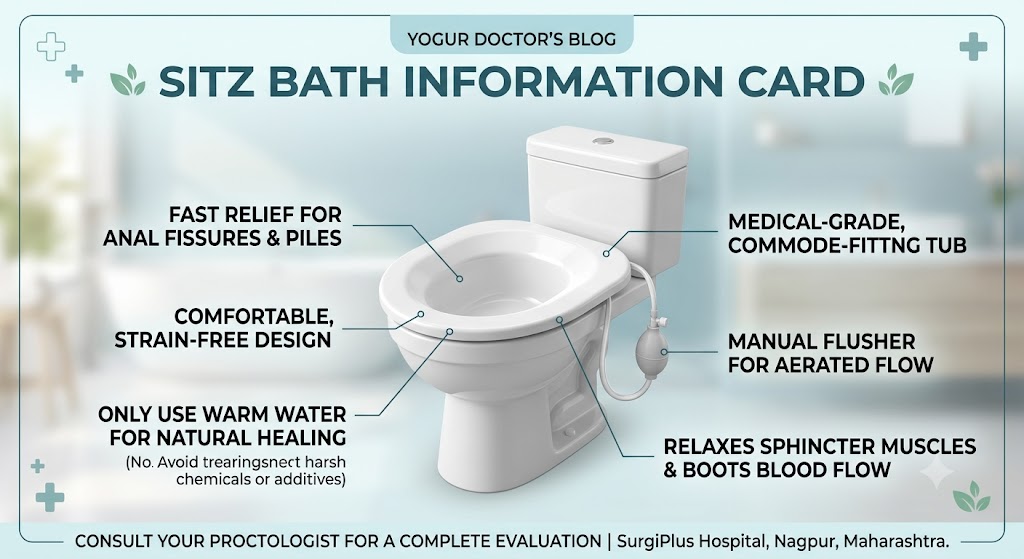
Medical Rule: The therapeutic benefit of a sitz bath comes entirely from the heat of the water. Warm water relaxes the hypertonic internal anal sphincter, relieves muscle spasms, and boosts microvascular blood flow to speed up tissue healing. Clean, comfortable tap water is all your body needs.
Why Commode-Fitting Tubs Are Essential
Traditional floor basins require deep squatting, which increases intra-abdominal pressure and exerts severe gravitational strain on swollen hemorrhoidal cushions.
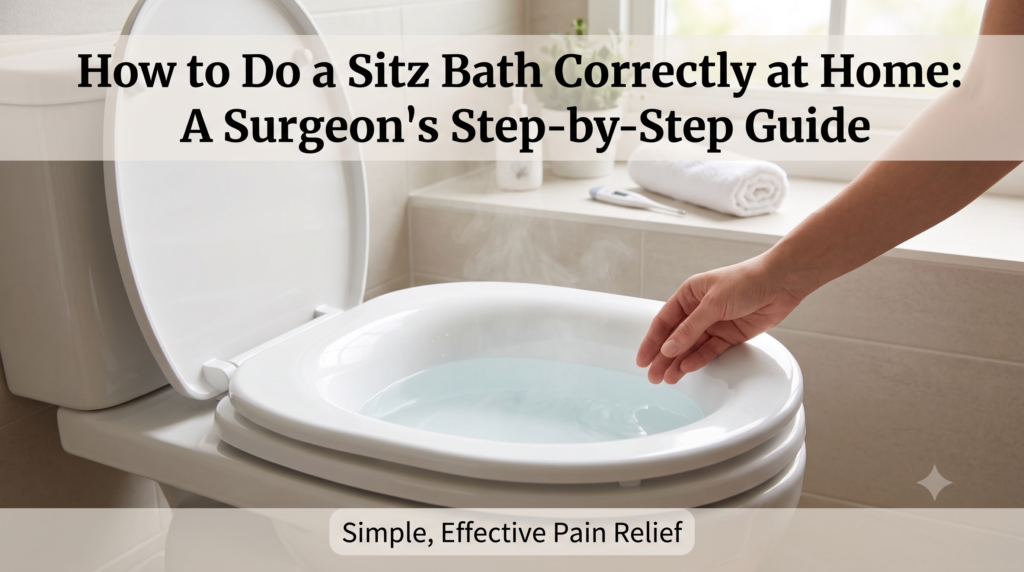
- Ergonomic Support: Commode-fitting sitz bath tubs sit directly on top of your existing Western toilet rim (beneath the seat). This allows you to sit upright with zero strain on your knees, hips, or back.
- Anti-Spill Outlets: Quality sitz bath basins feature built-in drainage holes at the back, allowing excess water to flow harmlessly into the commode bowl rather than spilling over your bathroom floor.
- What If You Have an Indian Toilet? If your home only has a squat toilet, do not attempt to balance a basin on the floor. Instead, place a standard commode chair over the squat area and drop the sitz bath tub onto the commode chair seat. This creates an elevated, comfortable setup that protects your pelvic floor.
Step-by-Step: How to Take a Sitz Bath
1.Test the Water Temperature:Target: 37 C to 40 C (Comfortably Warm, Not Scalding).
Fill a clean jug with warm water. Test the temperature on your inner wrist first. The skin around the anal canal is far more sensitive to thermal burns than the palms of your hands.
2.Position the Basin:Lift the toilet lid and seat.
Place the sitz bath basin securely over the porcelain bowl of your Western commode or commode chair. Ensure it sits level and does not wobble.
3.Fill the Basin:Fill approximately halfway to two-thirds full.
Pour the warm water into the basin until it reaches below the overflow vents. If using a tub with a manual flusher pump, connect the nozzle to the bottom suction inlet.
4.Sit and Soak for 10 to 15 Minutes:
Lower yourself gently onto the basin. Ensure your perineal area is completely submerged. Relax your pelvic floor muscles. Squeeze the manual bulb flusher if attached to produce a gentle warm-water aerated massage.
5.Pat Completely Dry (Never Rub):
Rise carefully. Use a clean, soft cotton towel or a hair dryer on the “cool” air setting to gently pat the perianal area dry. Avoid vigorous wiping, as friction re-injures healing tissue.
Choosing the Right Sitz Bath Basin
Investing in a dedicated basin avoids makeshift bathroom messes and ensures you follow your soak routine consistently twice or thrice a day.
Medical Grade Foldable Sitz Bath Basin with Hand Flusher
A durable, medical-grade basin designed to fit universally across standard oval and elongated Western commodes as well as bedside commode chairs.
- Key Features:
- Ergonomic contoured seating designed to alleviate pressure on anal fissures and swollen piles.
- Collapsible, high-grade silicone basin body for easy, discreet wall-hanging and travel storage.
- Built-in overflow drainage channels to prevent water spills.
- Manual squeeze-bulb flusher that produces gentle water aeration to cleanse delicate wounds without contact.
[Check Current Price & Delivery Options for Commode Sitz Bath Tubs on Amazon →]
Frequently Asked Questions (FAQs)
1. How many times a day should I take a sitz bath?
For acute anal fissures, thrombosed piles, or post-surgical wound care, taking a sitz bath 2 to 3 times daily for 10 to 15 minutes is ideal. Taking a soak immediately following a bowel movement is especially beneficial to relieve sphincter spasms and soothe local discomfort.
2. Can I use hot water instead of warm water for quicker pain relief?
No. Very hot water causes cutaneous vasodilation, which can worsen local swelling, increase throbbing pain, and cause thermal burns to the anoderm. The water should be comfortably warm, similar to bath temperature (around 38°C to 40°C).
3. How long should I continue taking sitz baths?
You can safely take warm sitz baths until your symptoms resolve or until your surgical wound has completely epithelized. Because it uses only pure water without medications, there is no risk of systemic drug absorption or topical habituation.
4. Is a sitz bath safe during pregnancy and after normal delivery?
Yes. Warm sitz baths are widely recommended by obstetricians to soothe perineal swelling, hemorrhoids during the third trimester, and episiotomy scars following vaginal delivery.
5. What should I do if pain or bleeding worsens during a sitz bath?
A warm sitz bath should provide prompt soothing relief. If you experience sharp, escalating pain, active continuous bleeding, or notice foul-smelling discharge, discontinue use and consult a specialist for a physical evaluation.
About the Author & Clinical Reviewer
MS, FISCP, CUSG
Consultant Coloproctologist & Laparoscopic Surgeon
Dr Pitambar Masram specializes in advanced laser and minimally invasive management of anorectal conditions, including piles, complex anal fistulas, fissures, and pilonidal sinus disease.
Clinical Practice Location:
Koradi, Nagpur, Maharashtra, India
[View this model of medical-grade sitz bath on Amazon with fast delivery options ]