

Cremaffin Plus Syrup is a commonly used laxative preparation for constipation, particularly when hard stools, straining or difficult bowel movements are a problem. However, many people are confused about the difference between Cremaffin Syrup and Cremaffin Plus Syrup.
Although both medicines are used for constipation, their compositions are different. Cremaffin Syrup contains liquid paraffin and milk of magnesia, while Cremaffin Plus Syrup contains these two ingredients along with sodium picosulfate, a stimulant laxative. Abbott India lists both products in its gastroenterology portfolio.
This additional ingredient means that Cremaffin Plus Syrup has a different mechanism of action and may be useful when a stronger bowel-stimulating effect is required.
Important: Laxatives should not be used routinely for every episode of constipation. Persistent constipation, severe abdominal pain, vomiting, blood in stool or unexplained weight loss requires medical evaluation.
What Is Cremaffin Syrup?
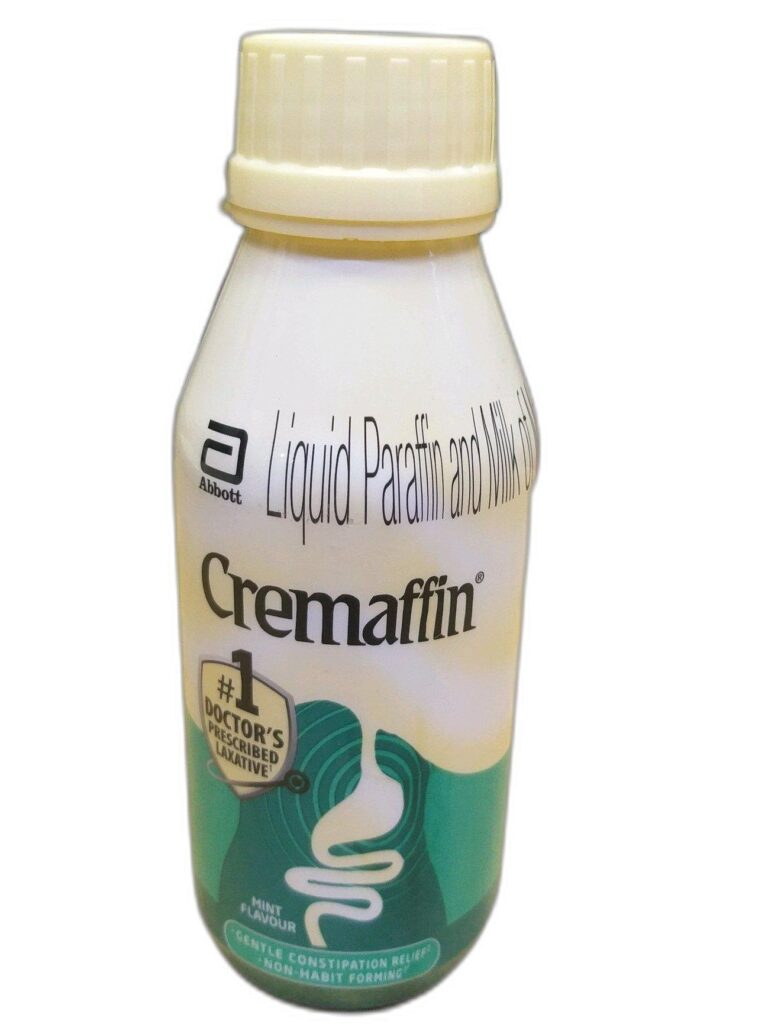
Cremaffin Syrup is a laxative containing Milk of Magnesia and Liquid Paraffin. Abbott’s current product information describes Cremaffin as an emulsion containing these two ingredients.
The two components work in different ways:
- Milk of Magnesia (magnesium hydroxide) helps increase water in the intestine and softens stools.
- Liquid paraffin acts as a lubricant and helps make the passage of hard stool easier.
Therefore, Cremaffin is particularly useful when constipation is associated with hard or dry stools.
The manufacturer’s current patient information gives age-based dosing guidance and recommends taking it preferably at bedtime with water.
What Are the Contents of Cremaffin Syrup?
The composition of the standard Cremaffin formulation is:
| Ingredient | Amount |
|---|---|
| Liquid Paraffin | 3.75 mL |
| Milk of Magnesia | 11.25 mL |
| Dosage volume | 15 mL |
Abbott’s product information lists the strength as 3.75 mL liquid paraffin + 11.25 mL milk of magnesia in 15 mL.
Cremaffin is available in different flavours, including mint and mixed fruit, and is marketed in different pack sizes.
What Are the Contents of Cremaffin Plus Syrup?
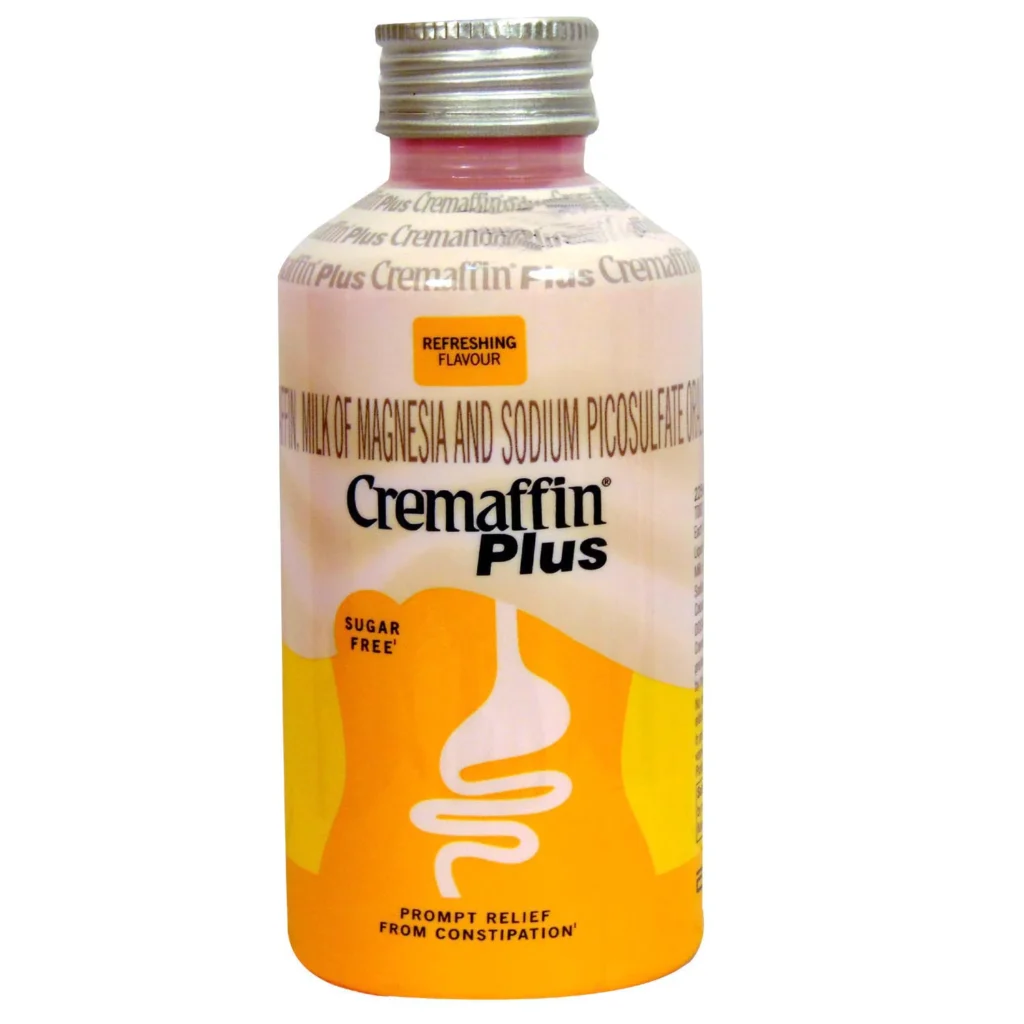
Cremaffin Plus Syrup contains three active ingredients:
| Ingredient | Amount per 5 mL |
|---|---|
| Liquid Paraffin | 1.25 mL |
| Milk of Magnesia | 3.75 mL |
| Sodium Picosulfate | 3.33 mg |
This composition is confirmed by Abbott India’s product information.
The important difference is sodium picosulfate.
Sodium picosulfate is a stimulant laxative. It promotes bowel movement by stimulating intestinal activity. Therefore, Cremaffin Plus has three complementary actions:
- Liquid paraffin – lubricates and facilitates passage of stool.
- Milk of magnesia – helps increase water in the bowel and soften stool.
- Sodium picosulfate – stimulates bowel movement.
This is why Cremaffin Plus Syrup should not be considered identical to ordinary Cremaffin Syrup.
Cremaffin Syrup vs Cremaffin Plus Syrup: What Is the Difference?
The simplest way to understand the difference is:
| Feature | Cremaffin Syrup | Cremaffin Plus Syrup |
|---|---|---|
| Liquid paraffin | Yes | Yes |
| Milk of magnesia | Yes | Yes |
| Sodium picosulfate | No | Yes |
| Main action | Stool softening + lubrication | Stool softening + lubrication + bowel stimulation |
| Type | Combination laxative | Combination laxative with stimulant |
| Suitable for | Constipation with hard stools | Constipation where additional bowel stimulation may be required |
| Cramping risk | Generally lower | May be higher because of stimulant component |
| Medical supervision | Recommended when symptoms persist | Particularly important with repeated/prolonged use |
Therefore, Cremaffin Plus Syrup is not simply a higher dose of Cremaffin. It contains an additional active medicine.
How Does Cremaffin Plus Syrup Work?
The three ingredients in Cremaffin Plus Syrup work through different mechanisms.
1. Liquid Paraffin
Liquid paraffin helps lubricate the stool and intestinal contents, making hard stool easier to pass.
2. Milk of Magnesia
Milk of magnesia contains magnesium hydroxide. It has an osmotic effect that helps retain water in the intestine, thereby softening stool.
3. Sodium Picosulfate
Sodium picosulfate is a stimulant laxative that increases intestinal motility and promotes bowel movement.
The combination therefore provides stool softening, lubrication and stimulation of bowel movement.
What Is the Dose of Cremaffin Syrup in Adults and Children?
The manufacturer’s current Cremaffin information gives the following general dosing guidance:
Adults and children over 12 years
1 to 3 tablespoonful.
This corresponds approximately to 7.5–15 mL.
Children 5–12 years
1–2 teaspoonfuls, approximately 5–10 mL.
Children 3–5 years
½–1 teaspoonful, approximately 2.5–5 mL.
For this age group, you can not give dose without doctor prescription. Rather than this you can give lactulose preparation which is more suitable for this group.
What Is the Dose of Cremaffin Plus Syrup in Adults and Children?
The dose of Cremaffin Plus Syrup should be individualized according to age, severity of constipation, medical condition and response.
Published product information for Cremaffin Plus has described:
Adults and children over 12 years
Approximately 5 mL initially, with the dose potentially increased to 15 mL if required, under medical advice.
Children 5–12 years
Approximately 5 mL, preferably only as advised by a physician.
Children 3–5 years
Not recommended for this age group. You can give any lactulose preparation.
Children below 3 years
Cremaffin Plus is not recommended according to published product information.
Because Cremaffin Plus contains sodium picosulfate in addition to milk of magnesia and liquid paraffin, parents should not calculate a child’s dose simply by extrapolating the adult dose.
When Is Cremaffin Syrup Used?
Cremaffin may be used for symptomatic relief of constipation, especially when stools are hard or difficult to pass.
It may be considered in situations such as:
- Occasional constipation
- Hard stools
- Difficulty passing stool
- Straining during bowel movement
- Constipation associated with reduced mobility
- Constipation where soft stool is desirable
- Some patients with painful anorectal conditions where avoiding hard stools is important
In patients with anal fissure or piles, keeping stools soft can be an important part of conservative treatment because hard stool and straining can aggravate symptoms.
However, constipation associated with persistent bleeding, severe pain, weight loss or a significant change in bowel habits should not simply be treated repeatedly with laxatives.
What Are the Indications for Cremaffin Plus Syrup?
Cremaffin Plus Syrup may be prescribed for constipation when stool softening alone is insufficient and additional stimulation of bowel movement is required.
It may be used in situations such as:
- Constipation with hard stool
- Difficult bowel evacuation
- Constipation associated with anorectal conditions
- Situations where excessive straining should be avoided
- Selected pre- or post-operative situations, when specifically advised by a doctor
Historical Abbott product information has also described Cremaffin Plus in the context of avoiding straining in patients with haemorrhoids, anal fissures and certain perioperative situations.
The exact indication and duration should depend on the individual patient rather than simply choosing the “stronger” product.
Which Is Better: Cremaffin or Cremaffin Plus?
There is no single answer for every patient.
The choice depends on why the patient is constipated.
For example:
Hard stool with relatively adequate bowel movement:
A stool-softening/lubricating preparation such as Cremaffin may be sufficient.
Hard stool plus inadequate bowel movement:
A preparation containing a stimulant such as Cremaffin Plus may sometimes be selected by a doctor.
The important point is that Cremaffin Plus should not automatically be considered better than Cremaffin. It contains an additional stimulant component, so the choice should be based on the patient’s symptoms and clinical situation.
Can Cremaffin Plus Syrup Be Used for Piles?
Yes, it may be prescribed in selected patients with piles when constipation and hard stool are contributing to symptoms.
The objective is not to treat the haemorrhoids directly but to:
- Keep stool softer
- Reduce straining
- Make bowel movements easier
- Reduce mechanical irritation during defecation
However, recurrent piles should not be managed only with laxatives. Persistent bleeding, prolapse, severe pain or recurrent symptoms require examination by a doctor.
Can Cremaffin Plus Syrup Be Used for Anal Fissure?
Constipation and hard stool can aggravate an anal fissure.
For this reason, maintaining soft, easy-to-pass stool is an important component of fissure management.
Cremaffin Plus Syrup may be prescribed in selected patients, but it is not a treatment that heals every chronic fissure. Chronic anal fissure may require specific medical treatment and, in selected patients, a surgical procedure.
What Are the Side Effects of Cremaffin Plus Syrup?
Like other laxatives, Cremaffin Plus may cause side effects, particularly if the dose is excessive.
Possible problems include:
- Abdominal cramps
- Loose stools
- Diarrhoea
- Abdominal discomfort
- Nausea
- Bloating
The addition of sodium picosulfate means that cramping or excessive bowel movements may occur in some patients.
If significant diarrhoea develops, dehydration and electrolyte disturbances can become concerns.
Who Should Avoid Cremaffin Plus Syrup Without Medical Advice?
Extra caution is required in patients with:
- Severe or unexplained abdominal pain
- Suspected intestinal obstruction
- Ileus
- Nausea or vomiting of unclear cause
- Severe dehydration
- Significant kidney impairment
- Certain gastrointestinal diseases
- Recurrent or unexplained rectal bleeding
Published product information also lists intestinal obstruction, ileus, toxic megacolon, gastric retention and certain other gastrointestinal conditions among contraindications or precautions.
If constipation is accompanied by severe abdominal pain, vomiting, abdominal distension or inability to pass gas, taking a laxative without assessment can be inappropriate.
Can Cremaffin Plus Syrup Be Taken Every Day?
It should not be taken continuously or indefinitely without medical supervision.
Occasional constipation and chronic constipation are different problems. If a person repeatedly requires laxatives to pass stool, the underlying cause should be evaluated.
Long-standing constipation can be related to:
- Low dietary fibre
- Inadequate fluid intake
- Sedentary lifestyle
- Certain medicines
- Diabetes
- Hypothyroidism
- Irritable bowel syndrome
- Defecatory disorders
- Colorectal disease
A patient who needs regular laxatives should discuss the problem with a healthcare professional rather than continuously increasing the dose.
Cremaffin Plus Syrup vs Lactulose: Which Is Different?
Lactulose and Cremaffin Plus are different types of laxative preparations.
Lactulose is an osmotic laxative that increases water content in stool and is frequently used for longer-term management of constipation in appropriate patients.
Cremaffin Plus, on the other hand, combines:
- Liquid paraffin
- Milk of magnesia
- Sodium picosulfate
The appropriate choice depends on the cause and pattern of constipation.
What Other Brands Are Available?
Several medicines with compositions similar to Cremaffin Plus Syrup are available in India. Availability can vary between pharmacies and regions.
Examples reported in current medicine listings include:
- Easylax Plus – Cipla
- Cremopen Plus – Morepen Laboratories
- Laxikem Plus – Alkem Laboratories
- Smuth Suspension – Aristo Pharmaceuticals
- Mom Plus – IPCA Laboratories
Some of these products have the same or very similar active-ingredient strengths, but brand name alone should not be used to assume that two products are identical. Check the composition printed on the current pack.
For example, current listings show Easylax Plus with liquid paraffin 1.25 mL + milk of magnesia 3.75 mL + sodium picosulfate 3.33 mg per 5 mL.
Is Abbott a Reliable Manufacturer of Cremaffin?
Cremaffin and Cremaffin Plus are products marketed by Abbott India Limited. Abbott’s official Indian website currently lists both products within its gastroenterology portfolio and specifies their respective compositions.
Cremaffin has also been marketed in India for many decades. The current Cremaffin patient website states that the product has been available for more than 70 years.
However, a reputable manufacturer does not mean that every patient should take the medicine without assessment. The correct medicine, dose and duration still depend on the individual patient.
About the Author
Dr. Pitambar Masram, MBBS, MS, FISCP, is a general surgeon and coloproctologist with extensive experience in the evaluation and treatment of anorectal disorders, including piles, anal fissure and fistula.
At Surgiplus Hospital, Koradi, Nagpur, patients with constipation-related anorectal problems can be evaluated for conditions such as piles, fissure, fistula and other causes of anal pain or bleeding.
Medical information on this website is intended for educational purposes. It should not replace an individual examination and consultation with a qualified doctor.
Frequently asked Questions:
1. What is Cremaffin Plus Syrup used for?
Cremaffin Plus Syrup is used for constipation. It contains liquid paraffin, milk of magnesia and sodium picosulfate, providing lubrication, stool softening and bowel stimulation.
2. What is the main difference between Cremaffin and Cremaffin Plus?
The major difference is sodium picosulfate. Cremaffin contains liquid paraffin and milk of magnesia, whereas Cremaffin Plus additionally contains sodium picosulfate.
3. Can I take Cremaffin Plus Syrup for piles?
It may be prescribed when constipation and hard stools are contributing to piles symptoms. It helps make bowel movements easier but does not directly cure haemorrhoids.
4. Can children take Cremaffin Plus Syrup?
Children should receive it only according to age-appropriate medical advice. Published product information recommends against its use in children below 3 years and gives specific dosing guidance for older children.
5. Can Cremaffin Plus Syrup be taken for a long time?
It should not be used continuously for prolonged periods without medical supervision. Recurrent constipation should be evaluated to identify the underlying cause.
When Should You See a Doctor for Constipation?
Occasional constipation is common. However, medical evaluation is important when constipation is:
- Persistent or recurrent
- Associated with blood in stool
- Associated with unexplained weight loss
- Associated with severe abdominal pain
- Associated with vomiting
- Associated with abdominal distension
- A new problem in an older adult
- Associated with a major change in bowel habits
- Not improving despite appropriate treatment
Do not keep increasing the dose of Cremaffin Plus Syrup when constipation does not improve. The problem may not simply be a lack of laxative.
Key Takeaway: Cremaffin vs Cremaffin Plus
The easiest way to remember the difference is:
Cremaffin = Liquid Paraffin + Milk of Magnesia
Cremaffin Plus = Liquid Paraffin + Milk of Magnesia + Sodium Picosulfate
Therefore, Cremaffin Plus Syrup has an additional stimulant laxative component. It can be useful in selected cases where additional bowel stimulation is required, but it should not automatically be considered better than ordinary Cremaffin.
For occasional constipation, the choice of laxative should depend on the patient’s symptoms, age, medical history and the cause of constipation.
If constipation is recurrent or associated with anal pain, bleeding, fissure or piles, it is better to determine the underlying problem rather than repeatedly taking laxatives.
Medical Disclaimer: This article is intended for general health education. Medication doses can vary according to age, medical conditions, other medicines and clinical circumstances. Do not start, stop or change laxative treatment without appropriate medical advice, particularly in children, elderly patients, pregnant women and people with kidney or gastrointestinal disease.